

Woodland Caribou
At the Preserve
In Our Care & Collection:
| 3 | . | 4 | . | 0 |
| Male | Female | Young |
The Habitat:
| 35.6 |
| Acres |
Photos from the Preserve:


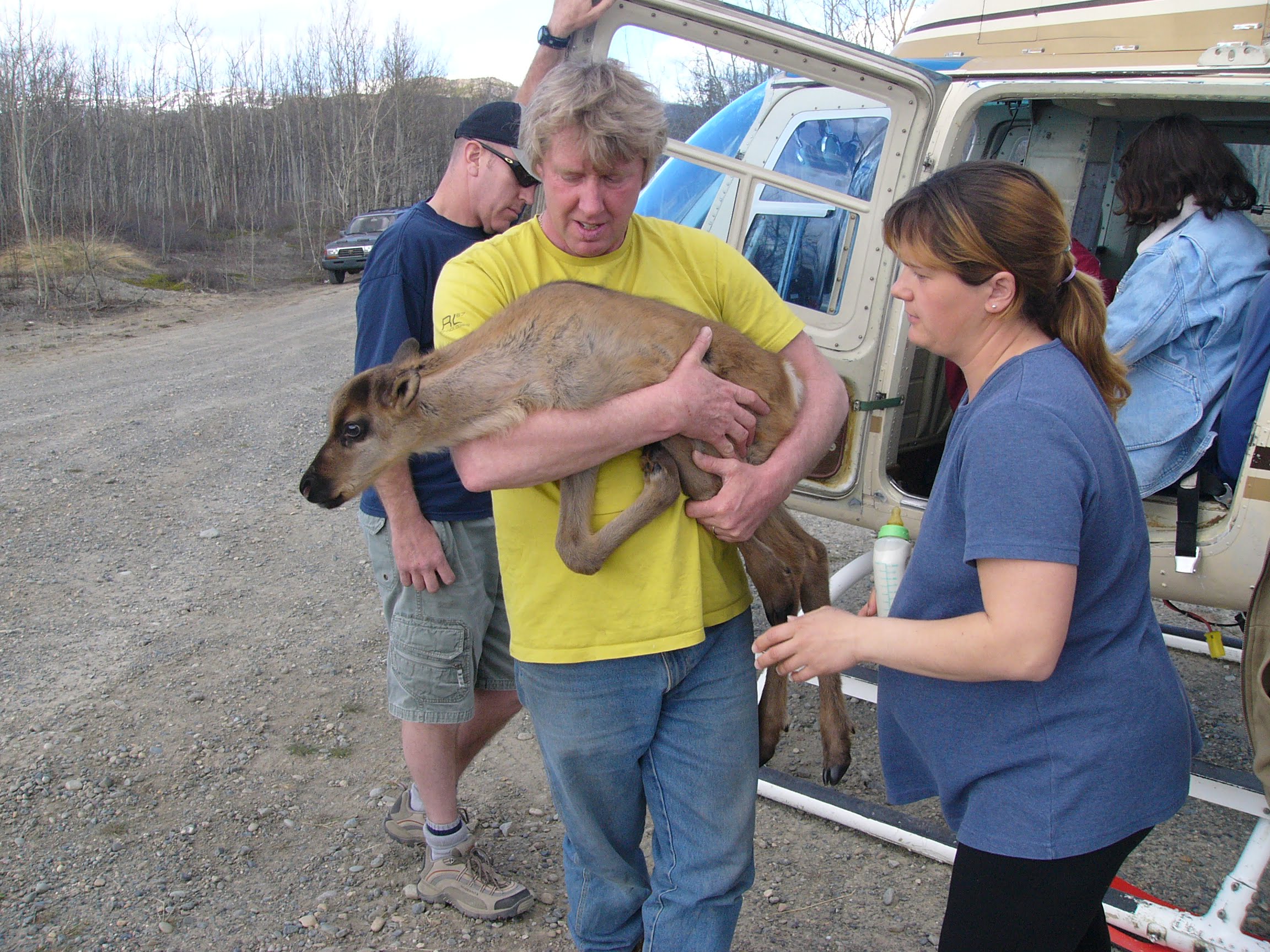


Articles from the Preserve:
Resources
General Overviews
Caribou in the Yukon from Department of Environment, Yukon Government.
This page has all the basics for Woodland and another page for Barren-Ground Caribou in the Yukon, including tracks, scat, range and more!
Boreal Caribou Can Coesit with Natural but Not Industrial Disturbances
This article from the Journal of Wildlife Management, Steward et al. 2020 explores woodland caribou populations in Alberta, Canada, and their declines due to development and subsequent disturbance through fire, and particularly, industry.
Caribou have lived in the Yukon for a very long time. How long exactly? Find out on the Beringia Museum’s webpage along with recent palaeontological discoveries!
Yukon Specific Research
Southern Lakes Caribou Recovery Program
This website outlines the community-based recovery initiative started in response to declining caribou numbers. It includes information on their work and process as well as a map of their findings!
Caribou Population in Yukon, Canada
A map based dashboard to explore caribou statistics in the Yukon, both woodland and barren-ground. Explore population dynamics, range, density.
Contribute a Resource
Do you have resources (especially Yukon specific ones) we should know about? Send us a link and summary/blurb to add to this page.

Yukon Wildlife Preserve
Box 20191
Whitehorse, Yukon
Y1A 7A2
Proud member of:

With the support of: