

Canada Lynx
At the Preserve
In Our Care & Collection:
| 0 | . | 2 | . | 0 |
| Male | Female | Young |
The Habitat:
| 24,394 |
| Square Feet |
Photos from the Preserve:
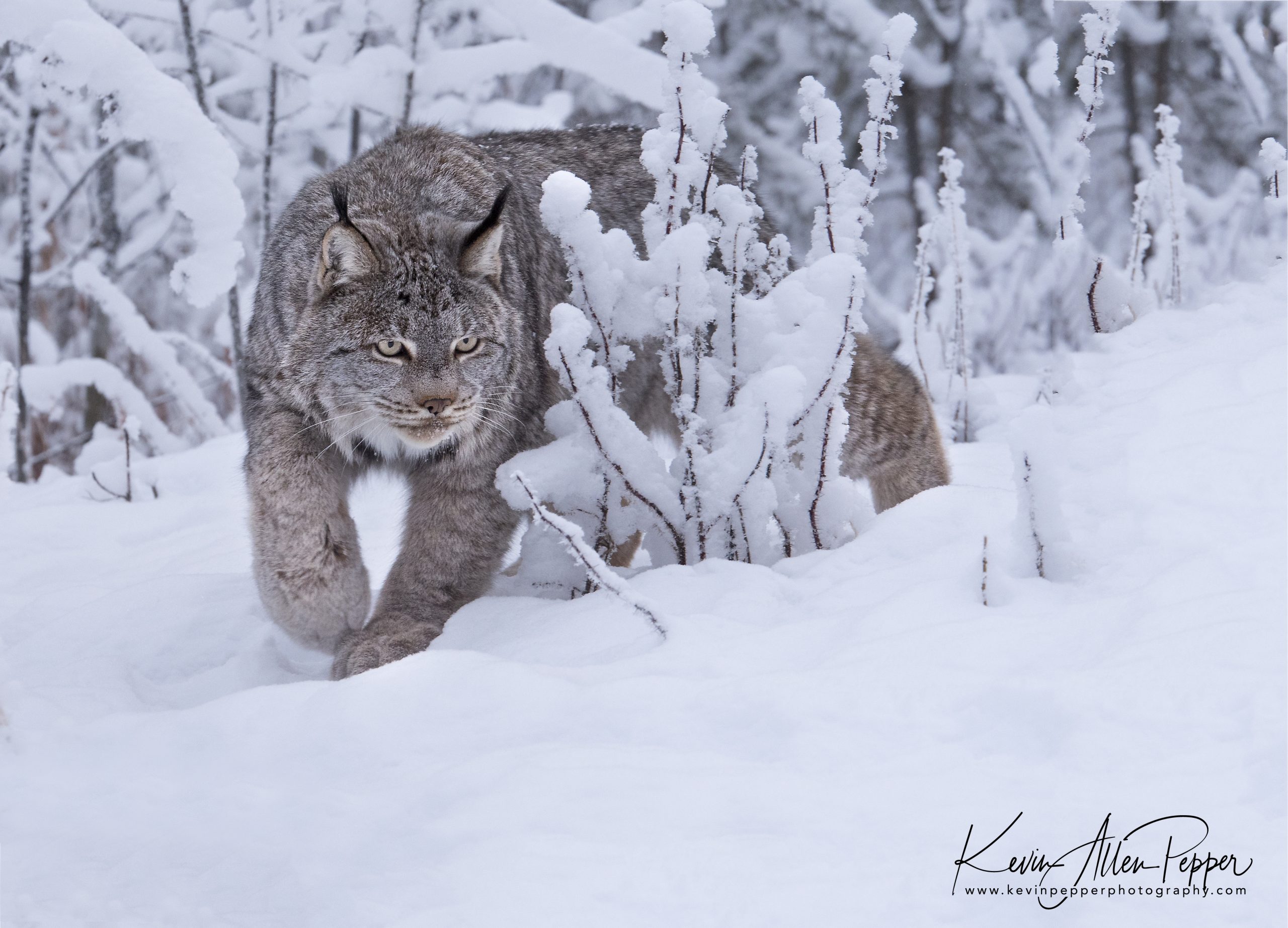


Articles from the Preserve:
Resources
General Overviews
Canada Lynx in the Yukon from Department of Environment, Yukon Government.
This page has all the basics for lynx in the Yukon, including Tracks, scat, range and more!
Population regulation in snowshoe hare and Canadian lynx: Asymmetric food web configurations between hare and lynx by Stenseth, N.C.; Falck, W.; Bjørnstad, O.N.; Krebs, C.J. published in Proceedings of the National Academy of Sciences:
The lynx is a specialist predator and its main prey is the snowshoe hare; when hare populations in a region decrease, so do the corresponding lynx population. But does this relationship go both ways: do lynx numbers also influence the number of snowshoe hares in the area? This paper explores this predator prey relationship in depth.
Scientist reveal the secret lives of Canada Lynx:
By attaching audio collars to these elusive boreal forest dwellers, researchers are able to capture an array of audio from lynx including purring, fighting, and possibly the crunching of bones of their preferred prey.
Contribute a Resource
Do you have resources (especially Yukon specific ones) we should know about? Send us a link and summary/blurb to add to this page.

Yukon Wildlife Preserve
Box 20191
Whitehorse, Yukon
Y1A 7A2
Proud member of:

With the support of: