
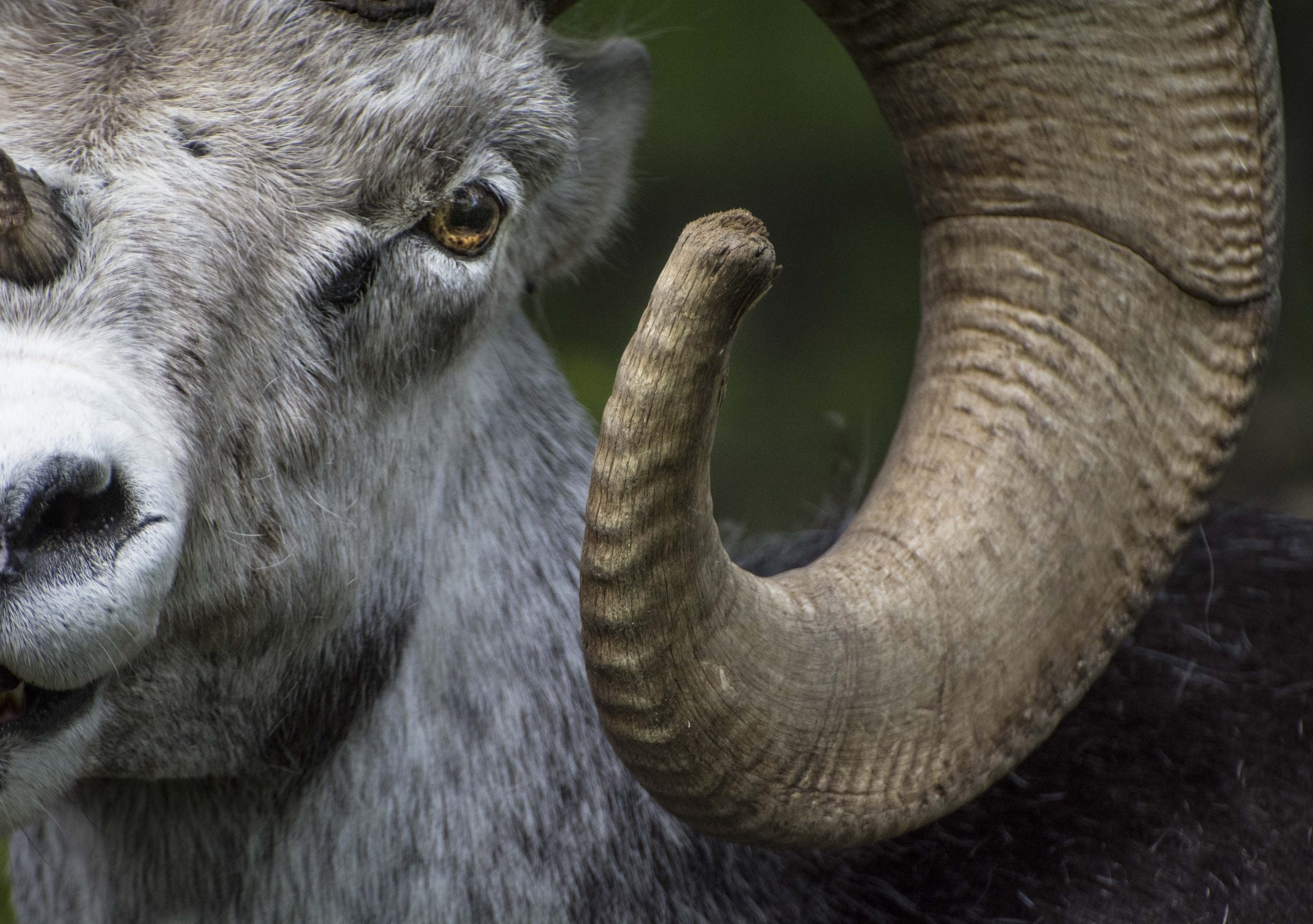
Thinhorn Sheep
At the Preserve
In Our Care & Collection:
| 7 | . | 15 | . | 2 |
| Male | Female | Young |
The Habitat:
| 32.05 |
| Acres |
Photos from the Preserve:


Articles from the Preserve:
Resources
General Overviews
Yukon Government- Dahl’s Sheep
These pages have all the basic information on Dahl’s sheep in the Yukon including range, characteristics, and herd behaviour.
Yukon Government- Stone’s Sheep
A brief overview of stone’s sheep in the Yukon.
Yukon Government- Thinhorn Sheep
A detailed digital booklet put out by the Yukon Government that provides an in-depth look at the Yukon’s thinhorn sheep population. Learn about their horn growth, genetic variation, and more!
Hinterland Who’s Who- Mountain Sheep
This page provides information on all types of North American mountain sheep, not just thinhorns. You can find useful comparisons here of bighorn vs. thinhorn sheep!
Yukon Specific Research
Zijian Sim’s Research Gate Page featuring Thinhorn Sheep articles
Zijian Sim is a PhD student in the department of biological sciences at the University of Alberta who has studied thinhorn sheep in BC and the Yukon. His papers on horn size and genetic diversity in thinhorn sheep are available here.
Wild Sheep Foundation Magazine
Republished by Yukon Fish and Game Association. Ashley McEnroe write up on Yukon control order as a unique proactive piece of legislation to protect wild sheep. From summer 2019 edition. Some comparisons to other jurisdictions like BC, NWT and Alaska. Connects hunters to DOE chief veterinarian, to First Nations within article.
Contribute a Resource
Do you have resources (especially Yukon specific ones) we should know about? Send us a link and summary/blurb to add to this page.

Yukon Wildlife Preserve
Box 20191
Whitehorse, Yukon
Y1A 7A2
Proud member of:

With the support of: